About the Kirk's Dik-dik
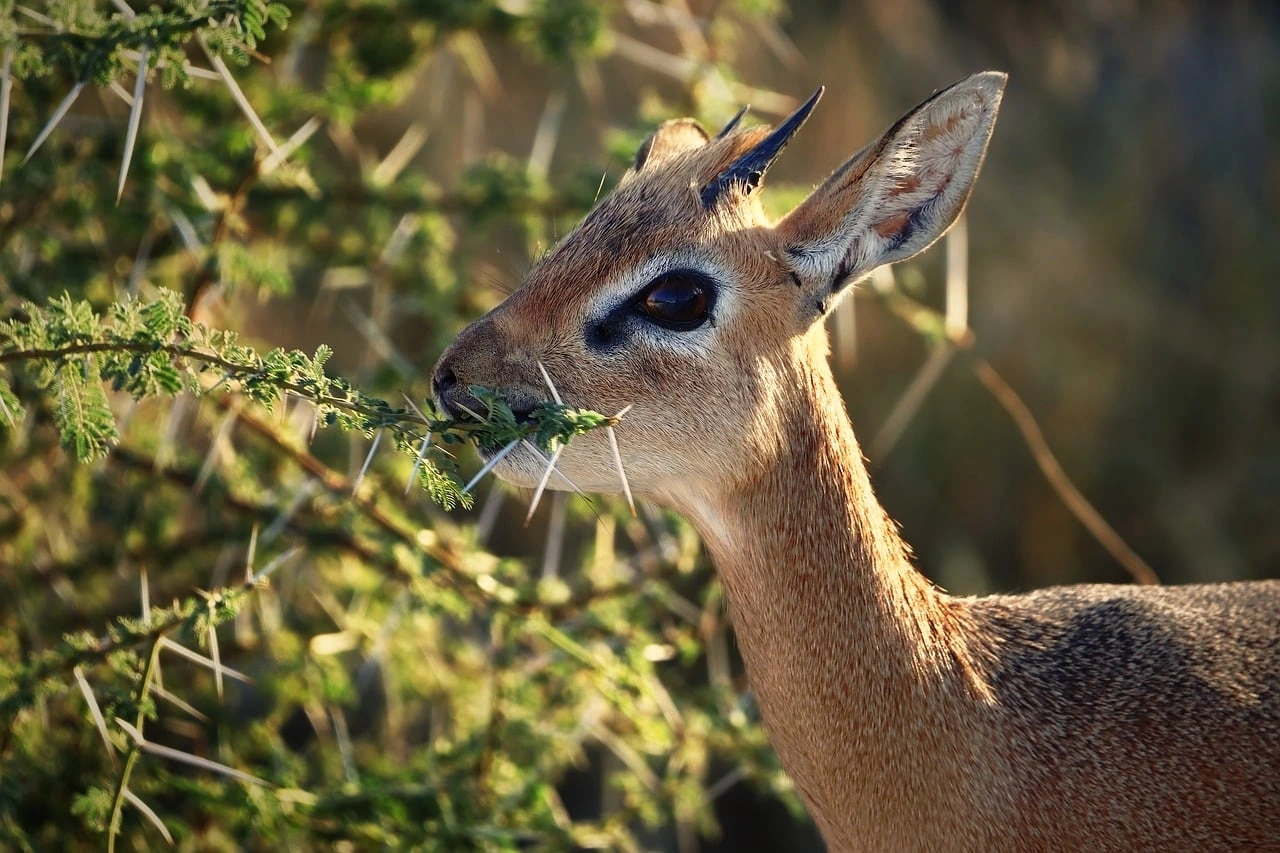
Dik-diks are among Kenya’s smallest antelopes. Kirk’s dik-dik has a grey-brown to reddish coat, elongated snout and mobile crest of hair on the forehead. Males have short horns that can be partly hidden by the crest.
Pairs often occupy long-term territories and communicate through scent marking and soft alarm calls. Their small size allows them to disappear quickly into thorny cover.
Safari context in Kenya: Within the current Greatlink Safaris destination network, useful places to look for this species include Giraffe Centre. Sightings remain natural and unpredictable, so Greatlink Safaris plans around habitat, season and realistic wildlife expectations rather than guarantees. Travellers can also explore the Kenya wildlife guide or compare private Kenya safaris that visit suitable ecosystems.
Conservation: Kirk’s dik-dik is assessed as Least Concern and remains widespread where suitable dry bush persists. For the latest global assessment and taxonomic notes, consult the IUCN conservation reference. Kenya protected area information is also available from the Kenya Wildlife Service.
Interesting facts and identification clues
- Dik-dik pairs often stay together within a small territory.
- The elongated nose helps with heat exchange and water conservation.
- They obtain much of their water from vegetation.
- When alarmed they may give a sharp whistling call and zig-zag into cover.
- Slow driving along bush edges gives the best chance of spotting them before they vanish.
Responsible viewing: Keep a respectful distance, avoid blocking the animal’s route, keep noise low and follow the driver guide’s instructions. Wildlife behaviour changes with weather, breeding, food, water and human pressure, so every encounter should be treated as an unscripted observation.
Content reviewed 1 Oct 2026