About the Waterbuck
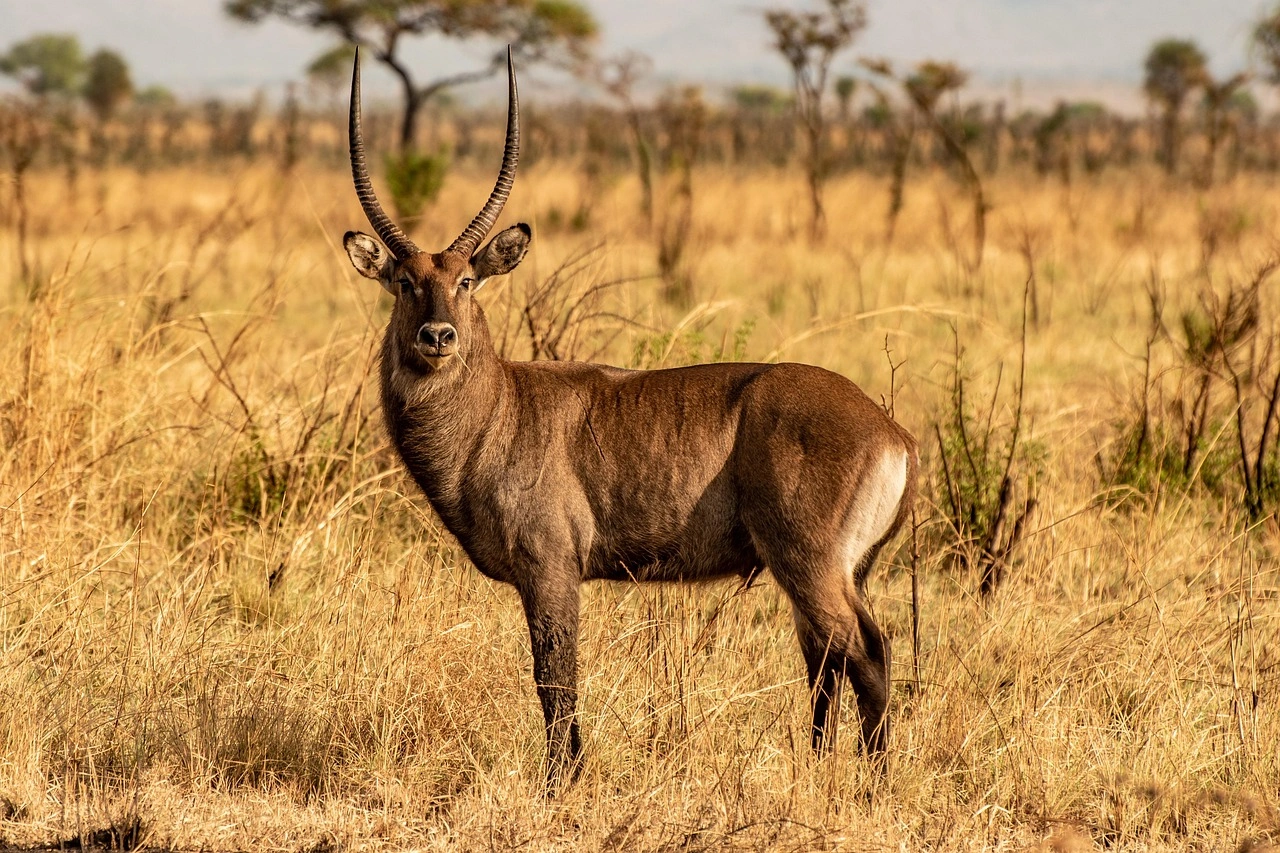
Common waterbuck have coarse grey-brown coats and a conspicuous white ring around the rump. Males carry long ridged horns; females are hornless. The Defassa form has a solid white rump patch rather than a ring.
Females and young form loose groups, while mature males may defend territories near productive grazing and water. Waterbuck are strongly associated with dependable water compared with many dry-country antelopes.
Safari context in Kenya: Within the current Greatlink Safaris destination network, useful places to look for this species include Lake Nakuru National Park, Lake Naivasha, and Aberdare National Park. Sightings remain natural and unpredictable, so Greatlink Safaris plans around habitat, season and realistic wildlife expectations rather than guarantees. Travellers can also explore the Kenya wildlife guide or compare private Kenya safaris that visit suitable ecosystems.
Conservation: Waterbuck are Least Concern at species level, though local populations depend on intact wetland and riverine systems. For the latest global assessment and taxonomic notes, consult the IUCN conservation reference. Kenya protected area information is also available from the Kenya Wildlife Service.
Interesting facts and identification clues
- The white rump ring is the classic identification mark of the common waterbuck.
- Their coarse coat can appear oily because of skin secretions.
- They stay closer to water than many other savannah antelopes.
- Only males carry horns.
- Do not confuse common waterbuck with Defassa waterbuck, which has a broad white rump patch.
Responsible viewing: Keep a respectful distance, avoid blocking the animal’s route, keep noise low and follow the driver guide’s instructions. Wildlife behaviour changes with weather, breeding, food, water and human pressure, so every encounter should be treated as an unscripted observation.
Content reviewed 1 Oct 2026