
The best time to visit Kenya for safari depends on what you want to see. Kenya is a year round wildlife destination, but the experience changes with rainfall, grass height, water availability, migration movements, visitor numbers and the habitats you choose. A traveller focused on the Great Wildebeest Migration may choose different dates from a photographer seeking dramatic green landscapes, a birder exploring Rift Valley lakes, or a family wanting a quieter school holiday safari.
Greatlink Safaris currently works with routes through Amboseli National Park, Masai Mara National Reserve, Samburu National Reserve, Ol Pejeta Conservancy, Lake Nakuru National Park, Tsavo and other major Kenya safari areas. Each has its own seasonal strengths.
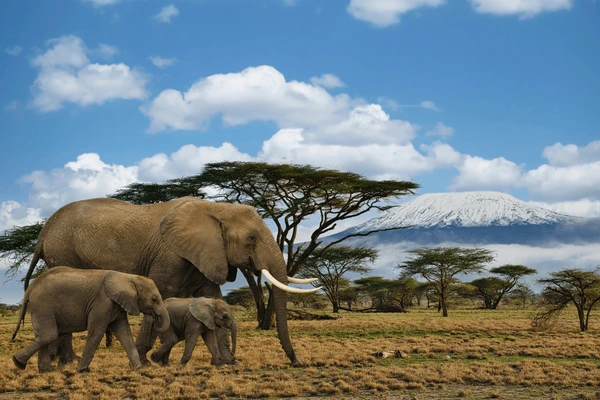 Amboseli is especially rewarding in the drier months, although Mount Kilimanjaro views always depend on cloud and weather conditions.
Quick answer: when is the best time for a Kenya safari?
For many first time visitors, June through October is one of the easiest periods for classic wildlife viewing. Vegetation is generally drier and shorter in many safari regions, wildlife often concentrates around dependable water, and the Masai Mara can receive migrating herds during part of this period. January and February are also popular because many regions are relatively dry and warm.
That does not make the wetter months a bad time to travel. The green season can bring fewer vehicles, dramatic skies, fresh vegetation, young animals, strong birding and a different photographic mood. Road conditions can be more demanding in some areas, and heavy rain can change a day's plan, but travellers who value atmosphere and lower crowd pressure may prefer these months.
Kenya Wildlife Service describes Amboseli as a major elephant destination with diverse habitats and birdlife, while its current information for Lake Nakuru highlights the park's birdlife and black and white rhino conservation role. The right month therefore depends as much on your chosen ecosystem as on a national weather summary.
Kenya safari seasons at a glance
January and February: warm, generally drier and excellent for mixed safari routes
January and February can be a strong choice for travellers who want good general wildlife viewing without planning the trip entirely around migration season. Amboseli, Samburu, Tsavo and other dry country areas often fit well into this period. Warm days and relatively dry conditions can make road travel straightforward, although exact rainfall patterns vary from year to year.
This period also works well for a private multi region journey such as the 6 Day Amboseli, Samburu and Masai Mara Fly In Safari, where the emphasis is on contrasting landscapes rather than one seasonal spectacle.
March to May: long rains, green landscapes and lower visitor pressure
March can begin relatively dry and then transition into the long rains. April and May are commonly the wetter part of the year in many safari areas. Rainfall is not necessarily continuous all day, but heavy showers can affect unpaved roads, airstrip operations and the pace of game drives.
The reward is a greener landscape. Dust is reduced, skies can become dramatic, vegetation is fresh and many parks feel quieter. For photographers who do not require the classic dry season look, the colour can be exceptional. Travellers should allow flexibility in the itinerary and choose suitable vehicles and accommodation access.
June: landscapes begin drying and safari conditions strengthen
June is a useful transition month. In many areas, conditions become drier after the long rains and the landscape still retains some green colour. Visitor numbers generally begin rising as the northern hemisphere summer approaches.
In the greater Mara ecosystem, the migration does not arrive on a fixed calendar date. The Mara Conservancy states that the wildebeest migration usually begins reaching the Mara around June or July and can continue until November. Herd positions respond to rainfall and grazing, so travellers should avoid booking on the assumption that a river crossing will occur on a specific day. See the Mara Conservancy migration guidance.
July to October: dry season wildlife viewing and migration interest
July, August, September and October are among Kenya's most sought after safari months. Dry conditions make many wildlife areas easier to explore, while vegetation can become shorter and animals often gather near water. This is also the period most strongly associated with migration interest in the Masai Mara.
If the migration is your main priority, read the Great Wildebeest Migration experience guide and allow enough time in the Mara rather than trying to predict a single crossing. A crossing is a natural event, not a scheduled attraction.
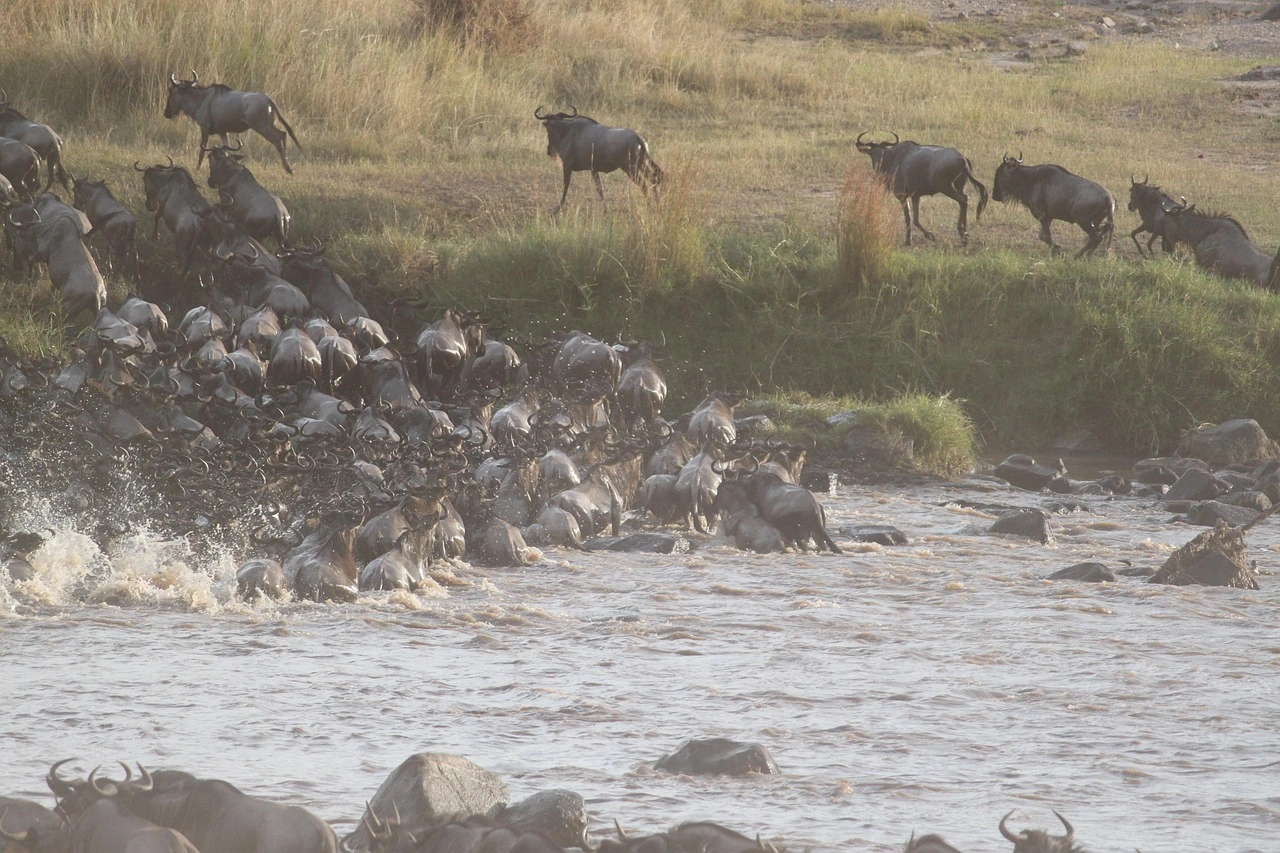 The migration can be a major reason to travel between July and October, but herd movement and river crossings remain unpredictable.
November: short rains and renewed colour
November often brings short rains to parts of Kenya. The effect can be a fast transformation from dry grassland to greener scenery. Rainfall may be localised, and some areas can still offer productive game viewing between showers.
This is a good month for travellers who value birding and atmosphere more than dry season certainty. Depending on rainfall patterns, migratory herds may still be present in the Mara during part of November, but no itinerary should promise exact herd location.
December: festive travel, green scenery and strong family demand
December can combine attractive green scenery with high demand around Christmas and New Year. Accommodation availability becomes important, particularly for families and groups. If travelling during the festive period, confirm accommodation and transport early.
Best time for the Masai Mara
The Masai Mara has resident wildlife throughout the year, so it is not only a migration destination. Lions, elephants, giraffes, buffalo, antelope, hyenas and other wildlife remain part of the ecosystem outside migration months.
For migration focused travel, June or July through October is the broad window most people consider, with possible continuation into November depending on conditions. For lower crowd pressure and greener scenery, other months can be very rewarding.
Best time for Amboseli
Greatlink Safaris currently lists June to October and January to February as strong periods for Amboseli National Park. Amboseli is especially valued for elephant viewing and the possibility of photographing wildlife with Mount Kilimanjaro in the background. Clear mountain views are never guaranteed because cloud can hide the summit even in otherwise good safari weather.
Best time for Samburu and northern Kenya
Samburu National Reserve offers a distinctly different safari from the Mara or Amboseli. Its dry country scenery, Ewaso Ng'iro river system and northern wildlife specialists make it valuable in a multi region itinerary. June to September and January to February are strong planning periods in the current Greatlink destination guide.
Best time for Lake Nakuru and the Rift Valley
Lake Nakuru National Park is a compact wildlife area with strong rhino viewing potential and significant birdlife. Flamingo numbers can fluctuate with lake conditions and food availability, so travellers should not treat historical photographs of huge flamingo concentrations as a guaranteed daily scene.
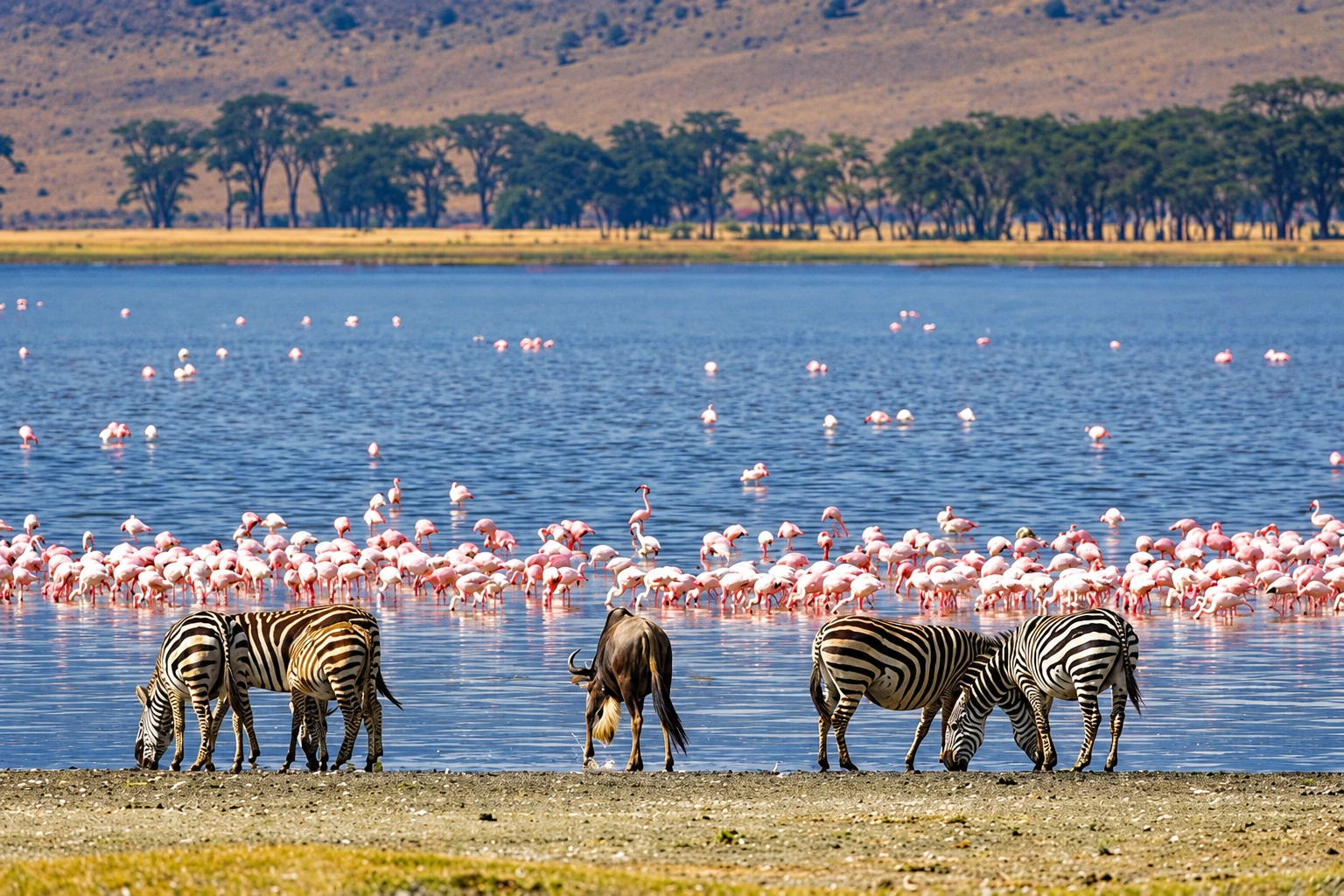 Lake Nakuru combines rhino conservation, birdlife and Rift Valley scenery within a relatively compact park.
When is the best time for photography?
There is no single best photography month. Dry season travel can give clearer views of wildlife and more predictable road access. Green season photography can offer saturated colour, dramatic clouds, reflections and cleaner backgrounds. Early morning and late afternoon light matter in every season.
Travellers with a strong photography focus may prefer a dedicated route such as the 10 Day Amboseli and Masai Mara Wildlife Photography Safari, where the pace can prioritise light, patience and positioning rather than simply covering distance.
When is the best time for birding?
Kenya is productive for birds throughout the year because resident species occupy a wide range of habitats. Seasonal migrants add another dimension, while lakes, wetlands, savannah, forest and dry country all produce different species communities. Browse the Specialist Birdwatching Experience for a focused half day or full day birding addition.
How to choose your month
- Choose July to October if migration interest and dry season wildlife viewing are central priorities.
- Choose January or February for warm, generally drier conditions and a strong multi park itinerary.
- Choose the green season if you value landscapes, photography mood, birding and lower visitor pressure.
- Choose December early if travelling over the festive period because accommodation demand can be high.
- Keep expectations flexible because rainfall, wildlife movement and road conditions vary between years.
Frequently asked questions
Is Kenya good for safari all year?
Yes. Kenya has resident wildlife throughout the year. The experience changes by region and season, so the better question is which month best suits your priorities.
What is the driest safari season in Kenya?
June through October is commonly the main dry season in many safari regions. January and February are also relatively dry in several areas.
What month is best for the Great Migration in Kenya?
The Mara Conservancy advises that migration season in the Mara usually begins around June or July and may continue to November. River crossings cannot be guaranteed on any specific date.
Should I avoid Kenya during the rains?
Not necessarily. Rain can affect roads and logistics, but it also creates greener scenery, fewer vehicles in some areas and strong photographic conditions. A private itinerary can be adjusted around local conditions.
Plan your Kenya safari around your priorities
The best Kenya safari calendar is personal. Tell Greatlink Safaris whether your priority is migration, elephants, rhinos, photography, birds, family travel, honeymoon time or a combination of several regions. We can then shape a private route using the current Kenya safari collection rather than forcing your dates into a generic itinerary.