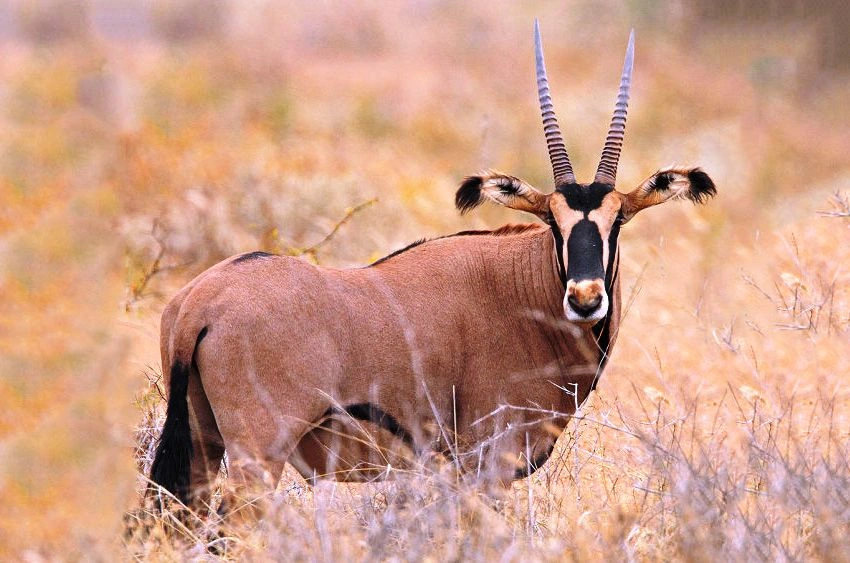
About the Fringe-eared Oryx
Fringe-eared oryx are pale grey to buff with dark facial stripes, a black flank line and very long straight horns. Small dark fringes on the ear margins give the form its common name.
They occur in small herds and can range widely in search of grazing. Like other oryx, they tolerate heat well and can obtain much of their water from food, although they will drink when water is available.
Safari context in Kenya: Within the current Greatlink Safaris destination network, useful places to look for this species include Tsavo East National Park and Tsavo West National Park. Sightings remain natural and unpredictable, so Greatlink Safaris plans around habitat, season and realistic wildlife expectations rather than guarantees. Travellers can also explore the Kenya wildlife guide or compare private Kenya safaris that visit suitable ecosystems.
Conservation: The wider Beisa oryx taxon is listed as Endangered. Habitat conversion, livestock competition and hunting are important pressures across parts of East Africa. For the latest global assessment and taxonomic notes, consult the IUCN conservation reference. Kenya protected area information is also available from the Kenya Wildlife Service.
Interesting facts and identification clues
- Long spear-like horns occur in both sexes.
- Light coat colour reflects heat and suits dry open country.
- Oryx can reduce water loss and tolerate high body temperatures during hot conditions.
- They may switch between grazing and browsing as seasons change.
- The fringe on the ears is subtle and usually needs a close view or photograph to confirm.
Responsible viewing: Keep a respectful distance, avoid blocking the animal’s route, keep noise low and follow the driver guide’s instructions. Wildlife behaviour changes with weather, breeding, food, water and human pressure, so every encounter should be treated as an unscripted observation.
Content reviewed 1 Oct 2026