About the Thomson's Gazelle
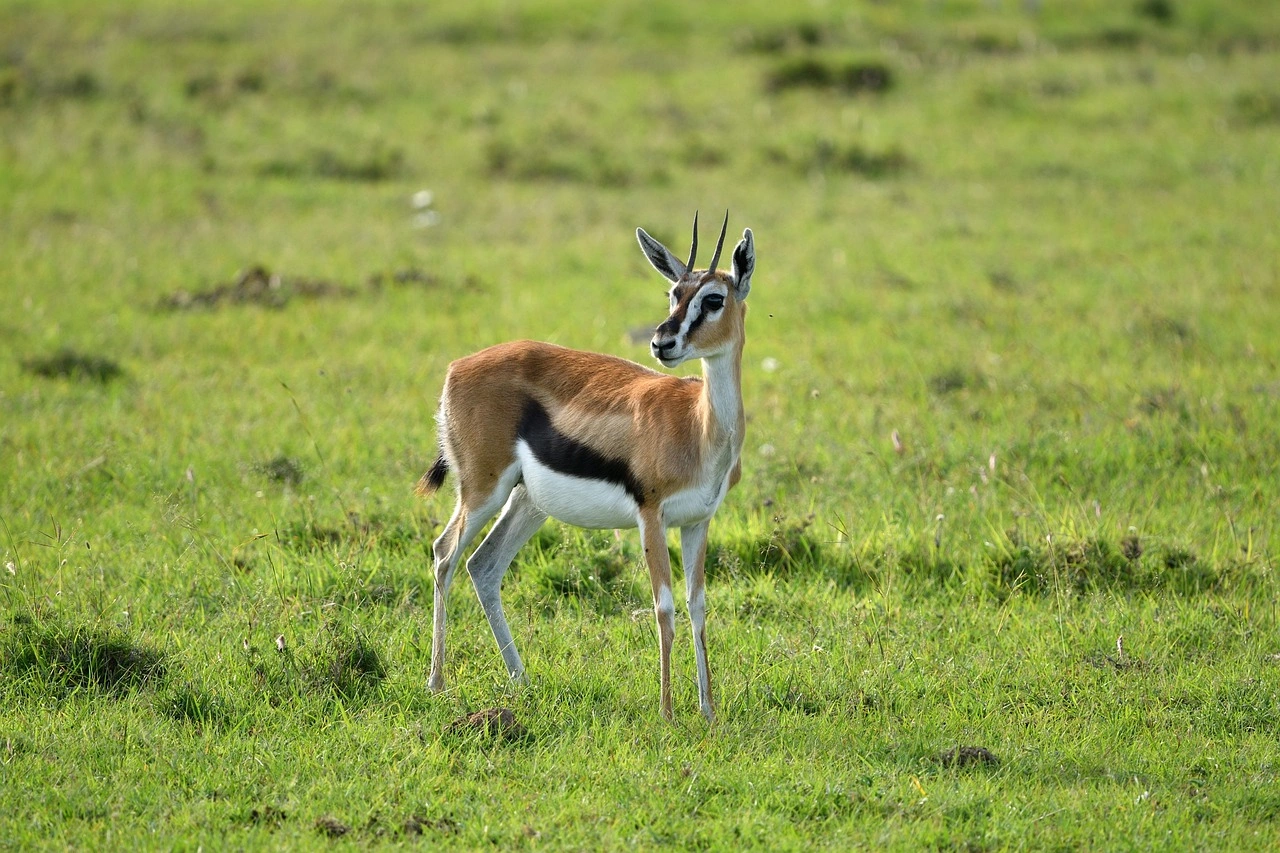
Thomson’s gazelles are smaller than Grant’s gazelles and have a strong black stripe along the flank, white belly and dark facial markings. Both sexes carry horns, though females have smaller, thinner horns.
They form flexible herds and follow short, nutritious grass created by rainfall, grazing and fire. Their small size and speed make them important prey for cheetahs.
Safari context in Kenya: Within the current Greatlink Safaris destination network, useful places to look for this species include Masai Mara National Reserve, Amboseli National Park, and Hell's Gate National Park. Sightings remain natural and unpredictable, so Greatlink Safaris plans around habitat, season and realistic wildlife expectations rather than guarantees. Travellers can also explore the Kenya wildlife guide or compare private Kenya safaris that visit suitable ecosystems.
Conservation: The species is Least Concern, but numbers are closely tied to healthy open grasslands and connected seasonal ranges. For the latest global assessment and taxonomic notes, consult the IUCN conservation reference. Kenya protected area information is also available from the Kenya Wildlife Service.
Interesting facts and identification clues
- The black flank stripe is the quickest field mark against Grant’s gazelle.
- They prefer very short, nutrient-rich grass.
- Cheetahs often target Thomson’s gazelles because both species favour open ground.
- Stotting or pronking can signal alertness during predator encounters.
- Large numbers may gather where fresh grass follows rain.
Responsible viewing: Keep a respectful distance, avoid blocking the animal’s route, keep noise low and follow the driver guide’s instructions. Wildlife behaviour changes with weather, breeding, food, water and human pressure, so every encounter should be treated as an unscripted observation.
Content reviewed 1 Oct 2026